

Uses of Garlic
Garlic is most commonly used as a seasoning, but in some cases, it can also be eaten raw as a vegetable.
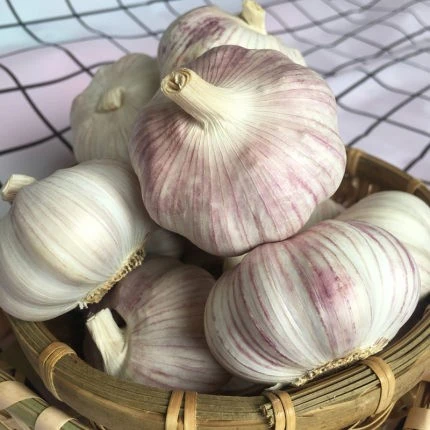
This seasoning is suitable for a wide range of dishes, including salad dressings, vinaigrettes, pickles, and sauces, as well as vegetables, meats, soups, and stews.
It is frequently used to make garlic butter and garlic toast. If fresh garlic is unavailable, one-eighth of a teaspoon of garlic powder can be substituted for a clove of fresh garlic.
Garlic Buying Guide
When purchasing garlic bulbs in bulk, select ones that are plump and firm, with the papery skin largely intact. The skin should be free from sprouting, soft spots, or other blemishes.
Fresh garlic and peeled garlic are readily available year-round.
In addition to fresh bulbs, garlic can be purchased in various forms, including peeled cloves, garlic powder, garlic flakes, garlic oil, and garlic paste.
How to Store Garlic in Bulk?
Fresh garlic bulbs can be stored for 4 to 6 months in a cool, dry, and well-ventilated area. However, it is best consumed within a few weeks of purchase. Roasted garlic cloves can be frozen and stored for several months.
If garlic has been chopped, minced, or otherwise processed, it should be stored in the refrigerator. Proper refrigeration helps prevent the garlic's odor from permeating other foods in the fridge.
Garlic Planting Time and Methods
Garlic is typically grown from individual cloves, though whole bulbs can sometimes be used. Planting generally takes place in March or April; however, in plain regions, the crop matures in September or October.
Garlic yield per unit of land is influenced by various factors. I recommend a row spacing of 15–20 cm and a plant spacing of 8–10 cm.
Fertilization and Nutrient Requirements
Garlic responds very well to organic fertilizers; for optimal results, it is recommended to apply 16–20 tons of organic fertilizer per acre during field preparation.
Applying NPK fertilizers in a ratio of 75:85:55 kg can help increase yields. Half of the nitrogen fertilizer, along with all the phosphorus and potassium fertilizers, should be applied at planting; the remaining half of the nitrogen fertilizer should be applied 30–45 days after planting.
Irrigation and Inter-cultivation
Garlic requires irrigation once a week during the vegetative growth stage and once every 10–15 days during the maturation stage. As a crop that requires high-density planting, garlic needs manual weeding three to five times to achieve higher yields.
Harvesting
The crop is ready for harvest when the tops of the plants turn brown and show signs of drying and bending. Depending on environmental conditions, the bulbs mature 4–6 months after planting.


